What Lulah Hills Teaches Us About the Future of Development in South DeKalb
By Marion D. Williams, CCIM
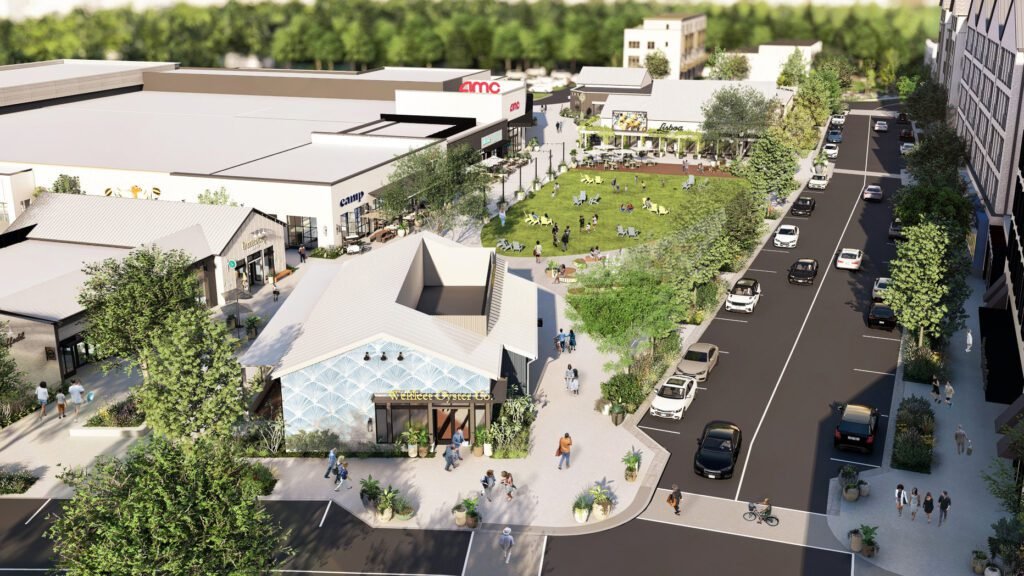
Rendering of Lulah Hills.
When Crescent Communities closed on the first phase of Lulah Hills—the massive redevelopment of the former North DeKalb Mall—everyone in the Atlanta real estate world took notice. It’s a textbook example of how a declining retail property can be transformed into a thriving mixed-use community.
Which raises the question:
**If Lulah Hills can happen in North DeKalb…Why not South DeKalb Mall?**
Both sites share similar characteristics:
Aging mall infrastructure
Underutilized land
Surrounded by strong residential neighborhoods
Direct access to major corridors
Proximity to institutional anchors and workforce populations
Yet North DeKalb received a multi-phase, 1,800-unit, 300,000 sq. ft. mixed-use redevelopment led by Crescent Communities, EDENS, and NTT Urban Development while South DeKalb Mall remains stagnant.
So what’s the difference?
1. Investor Perception & Market Signaling
Developers go where they believe capital will flow easily.
North Decatur carries a long-established narrative of:
✔ Strong incomes
✔ High absorption rates
✔ Retail success stories
✔ Institutional backing (Emory, CHOA, CDC)
South DeKalb’s narrative has never been rewritten — despite:
✔ Excellent workforce density
✔ Growing homeownership
✔ Strong spending power
✔ Direct access to I-20
✔ Proximity to the airport & distribution corridors
The market potential is there.
The messaging is not.
2. Public-Private Alignment
Lulah Hills worked because the developer, county leadership, and surrounding neighborhoods were aligned on a long-term vision.
South DeKalb lacks a unified, publicly communicated master plan that developers can underwrite and lenders can trust.
Developers don’t invest in land.
They invest in clarity.
3. Anchors That Signal Confidence
Lulah Hills benefits from:
A future Publix
Ties to Emory’s population
Strong retail tenants in the pipeline
South DeKalb Mall needs one catalytic anchor to start the domino effect — a grocer, educational institution, health system, logistics brand, or entertainment operator.
One anchor changes everything.
It changes traffic. It changes risk. It changes the story.
4. Community Narrative & Data Storytelling
North Decatur advocates consistently project:
“Smart growth, walkability, mixed-use, higher density.”
South DeKalb often gets stuck in conversations about what used to be rather than what the market could become.
A community narrative that says:
“South DeKalb is ready for its Lulah Hills moment”
— backed by data on spending, traffic patterns, demographics, and unmet retail demand — can reposition the entire submarket in the eyes of institutional capital.
What Needs to Change for a Lulah Hills-Style Redevelopment at South DeKalb Mall?
1. A publicly championed South DeKalb Master Plan
Developers commit when local leadership commits.
2. One catalytic anchor tenant
A major grocer, medical institution, or entertainment brand can flip the submarket overnight.
3. A unified investor pitch
South DeKalb needs a clean, data-driven package showing:
Retail gaps
Housing demand
Multifamily absorption
Transportation access
Workforce density
4. A strategic developer partnership
The same way Crescent Communities stepped in at Lulah Hills, South DeKalb must attract a Class A mixed-use developer with national capital partners.
5. A new public narrative
We must speak about South DeKalb’s potential using the same language the investment world respects: density, demand, talent, access, absorption, and ROI.
My Position:
South DeKalb can have a redevelopment just as transformative as Lulah Hills — but only when leadership, capital, and community align behind one bold vision.
The opportunity is there.
The land is there.
The population is there.
The demand is there.
What’s missing is the coalition and the narrative to unlock institutional investment.
South DeKalb deserves its moment.
And it starts with asking the right question:
Why not South DeKalb Mall?
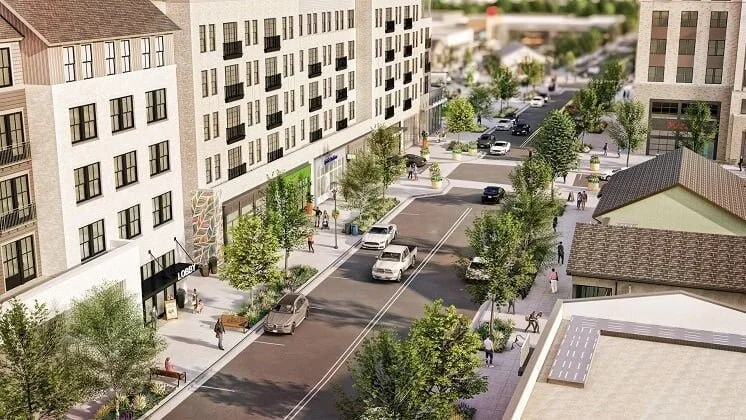
Rendering of Lulah Hills.